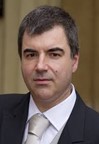
 | Prof Peer Fischer, Institute for Molecular Systems Engineering and Advanced Materials, Heidelberg University, Germany His research focuses on molecular systems engineering, with a pioneering emphasis on nanorobotics and 3D nanofabrication. He is a world-renowned expert in chiral optics and the interaction between magnetic fields and autonomous nanostructures. His work on smart materials and responsive systems is essential for the development of advanced sensing and lab-on-a-chip technologies. |
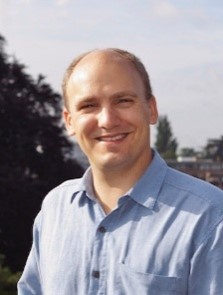 | Prof. Jonathan Nitschke, Department of Chemistry, University of Cambridge, United Kingdom His research explores the self-assembly of complex molecular architectures, particularly metal-organic cages and containers. He is a leader in the design of responsive systems and smart materials that can encapsulate and release guests. His work on functional molecular systems provides a fundamental basis for developing advanced sensing technologies and organized structures with unique magnetic and optical properties. |
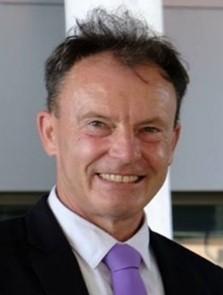 | Prof. Alexander Kuhn, NSysA group, Institute of Molecular Sciences, University of Bordeaux, France A specialist in electrochemistry ranging from analytical chemistry to energy conversion and catalysis. His work focuses on modified electrodes from the molecular to the macroscopic scale, with pioneering contributions to chiral surfaces and Janus particles. His research on symmetry breaking and asymmetric synthesis provides a fundamental framework for understanding the interaction between magnetism and molecular chirality.
|
 | Prof. Hiroshi Yamamoto, Institute for Molecular Science, Okazaki, Japan A specialist in solid-state chemistry and organic electronics ranging from quantum phase transitions to organic spintronics. His work focuses on the development of functional molecular materials, with pioneering contributions to the field of Mott insulators and superconducting transistors. His research on the CISS effect and the external control of spin phases provides a fundamental framework for understanding the synergy between molecular symmetry, topology, and electronic correlation in next-generation quantum devices.
|
 | Prof. Claudio Fontanesi, Dipartimento di Ingegneria “Enzo Ferrari”, UNIMORE, Italy His research focuses on molecular electrochemistry and surface science, with a specific emphasis on the role of electron spin in charge transfer processes. A leading expert in the study of the CISS effect, he investigates how molecular chirality can be exploited for advanced sensing and the development of spintronic devices. His work is fundamental to bridging the gap between theoretical foundations and industrial applications of organized molecular systems.
|
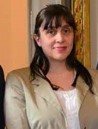 | Prof. Patrizia R. Mussini, Dipartimento di Chimica, Università degli Studi di Milano, Italy Her research focuses on molecular electrochemistry and the development of chiral electrode materials. She is a leading expert in enantioselective electroanalysis and the use of inherently chiral molecular systems. Her work on organic interfaces and surface modification provides fundamental insights into the CISS effect and the design of smart materials. |
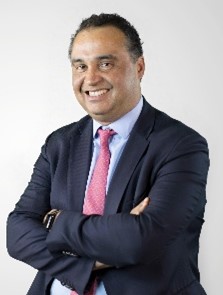 | Prof. Jérome Lacour, Department of Organic Chemistry, Université de Genève, Switzerland His research focuses on organic synthesis and the development of chiral molecular architectures. A world-renowned expert in asymmetric catalysis and the chemistry of chiral ions, he investigates the creation of complex systems with unique optical and magnetic properties. His work on symmetry breaking and organized molecular systems is fundamental for advancing the understanding of molecular spintronics and smart materials. |
 | Prof. Silvia Marchesan, Dipartimento di Scienze Chimiche e Farmaceutiche, Università degli Studi di Trieste, Italy Her research focuses on the self-assembly of small molecules, particularly chiral peptides, to create functional nanostructures. A recognized expert in smart biomaterials, she investigates how molecular chirality influences the formation of hydrogels and therapeutic platforms. Her work on responsive systems is key to developing innovative solutions for advanced sensing and sustainable nanotechnologies.
|
| Prof. Alberto Escarpa, Department of Analytical Chemistry, Physical Chemistry and Chemical Engineering, University of Alcalá, Spain His research focuses on analytical chemistry and the development of lab-on-a-chip platforms for advanced sensing. A pioneer in the field of micromotors and nanorobotics, he investigates the use of magnetic nanoparticles for environmental and biomedical applications. His work on scalable processes and smart materials is essential for bridging the gap between fundamental research and industrial applications. . Dott. Paolangelo Cerea, Olon SpA, Italy Expert in industrial R&D and chemical production, he represents the bridge between advanced molecular research and large-scale pharmaceutical applications. At Olon SpA, a global leader in API manufacturing, he focuses on the implementation of innovative technologies for sustainable and scalable industrial processes.
Dott. Marco Bianchessi, STMicroelectronics, Italy An expert in the development of advanced microelectronics and smart systems. He represents the strategic link between fundamental molecular research and large-scale industrial integration within the semiconductor and advanced sensing sectors.
Prof. Sir Kostya Novoselov, National University of Singapore / University of Manchester Nobel Laureate in Physics Awarded the Nobel Prize for his groundbreaking work on graphene, Prof. Novoselov is a pioneer in the field of two-dimensional materials and molecular systems. His current research explores ‘intelligent’ materials and the interface between physics, chemistry, and biology. His participation brings a visionary perspective on how the control of spin and magnetism at the atomic level will define the next generation of quantum technologies and advanced materials.”
|
|